Introduction: Gold Enters a Historic Phase in 2026
Gold prices have entered a historic bull phase in early 2026, shocking investors, traders, and consumers alike. From global markets to Indian cities, gold has climbed to record-breaking levels, driven by geopolitical uncertainty, trade tensions, inflation concerns, and strong investment demand.
As of January 2026, gold is no longer just a safe-haven asset—it has become one of the best-performing assets in the world.
This detailed blog explores:
- Latest gold price news
- Global and Indian price trends
- Key reasons behind the surge
- Expert forecasts for 2026
- Impact on investors, traders, and jewelry buyers
- Whether this is the right time to buy gold
1. Gold Price Today: Global and Indian Snapshot
🌍 International Gold Prices
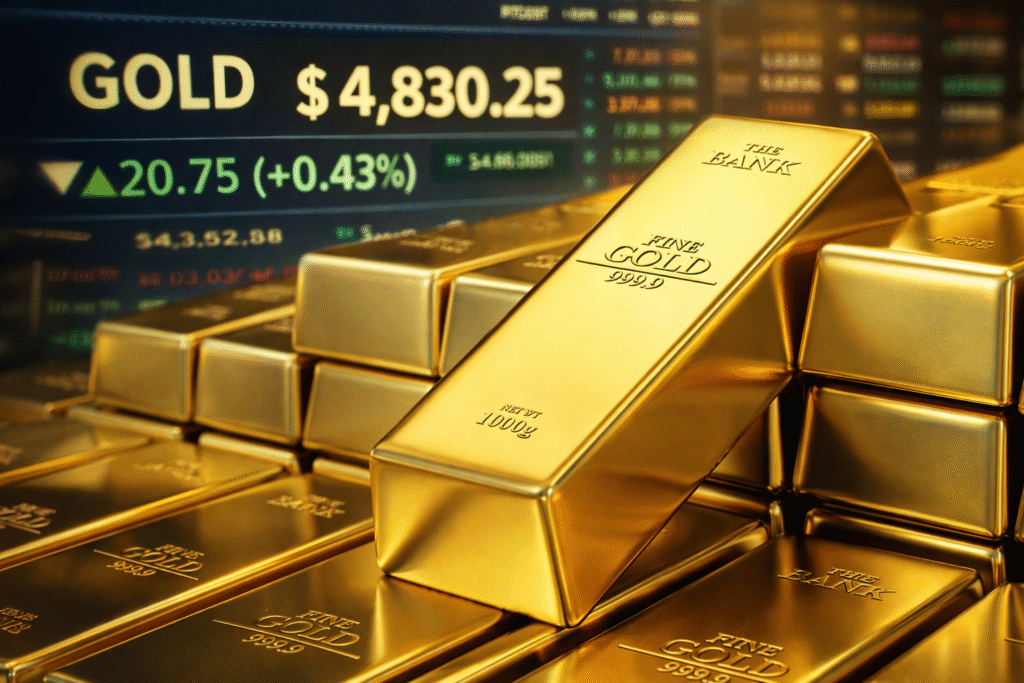
In global markets, spot gold has surged beyond $4,650–$4,700 per ounce, marking an all-time high. This rally has been fueled by:
- Increased safe-haven demand
- Weakening US dollar sentiment
- Fears of global economic slowdown
Gold futures on COMEX continue to trade with strong bullish momentum, indicating sustained institutional interest.
🇮🇳 Gold Prices in India
In India, gold prices have followed global trends while being amplified by currency movement and import duties.
Approximate prices (January 2026):
- 24K Gold: ₹14,600+ per gram
- 22K Gold: ₹13,400+ per gram
- 10 grams (24K): ₹1,46,000+
Major cities such as Mumbai, Delhi, Chennai, Ahmedabad, and Bengaluru have all reported record-high retail prices.
2. Why Are Gold Prices Rising So Fast in 2026?
2.1 Global Trade and Geopolitical Tensions
Renewed trade tensions between major global economies have increased market volatility. Investors typically move away from risky assets like equities and shift funds into gold during uncertain times.
Gold benefits because it:
- Holds value during crises
- Is not tied to any single country
- Acts as a hedge against instability
2.2 Inflation and Interest Rate Expectations
Despite global efforts to control inflation, price pressures remain persistent. Central banks are expected to pause or cut interest rates, which reduces the opportunity cost of holding gold.
Lower interest rates = higher gold prices.
2.3 Weak Dollar Outlook
Gold and the US dollar usually move in opposite directions. With expectations of:
- Slower US economic growth
- Possible rate cuts
- Rising fiscal deficits
…the dollar outlook remains weak, further supporting gold’s rally.
2.4 Central Bank Gold Buying
Central banks across Asia, the Middle East, and Eastern Europe have been aggressively increasing their gold reserves. This long-term accumulation creates structural demand, pushing prices higher.
3. Gold Demand Trends: Investment vs Jewelry
Investment Demand
Gold ETFs, digital gold platforms, and futures trading volumes have seen a sharp rise in early 2026. Retail and institutional investors are increasingly viewing gold as:
- A hedge against recession
- A portfolio stabilizer
- Protection from currency risk
Jewelry Demand
High prices have slightly reduced jewelry demand in price-sensitive markets like India. However:
- Wedding demand remains strong
- Rural demand stays resilient
- Consumers are shifting to lighter jewelry
4. MCX Gold and Indian Market Trends
On the Multi Commodity Exchange (MCX), gold futures have consistently made higher highs. Technical indicators suggest:
- Strong bullish momentum
- Healthy volumes
- Limited downside correction so far
Traders are closely watching:
- Global cues
- Rupee-dollar movement
- US economic data
5. Expert Forecast: Where Can Gold Go in 2026?
Short-Term Outlook (Next 3–6 Months)
Most analysts believe gold could:
- Consolidate at high levels
- Retest resistance near $4,800/oz
- Remain volatile but bullish
Long-Term Outlook (2026–2027)
Bullish projections suggest:
- $5,000 per ounce is possible
- ₹1,60,000 per 10 grams in India
- Strong support from central banks
Bearish risks include:
- Sudden rate hikes
- Strong equity market recovery
- Unexpected geopolitical calm
6. Should You Buy Gold at Record Highs?
For Long-Term Investors
Yes—gold still makes sense as portfolio insurance, especially if:
- Allocation is limited to 5–15%
- Buying is done via SIP or staggered purchases
For Short-Term Traders
Caution is advised. Prices are extended, and volatility can cause sharp corrections.
For Jewelry Buyers
Consider:
- Buying only on dips
- Exchanging old gold
- Choosing lighter designs
7. Impact on Indian Economy and Consumers
High gold prices affect:
- Trade deficit (higher import bill)
- Consumer spending
- Inflation perception
However, they also:
- Increase value of household savings
- Benefit gold loan and recycling businesses
8. Gold vs Other Assets in 2026
| Asset | Performance Outlook |
|---|---|
| Gold | Strong bullish |
| Equity | Volatile |
| Real Estate | Stable |
| Crypto | High risk |
| Bonds | Moderate |
Gold remains one of the most reliable assets in uncertain times.
9. Risks to Gold’s Rally
Despite bullish sentiment, risks include:
- Sudden geopolitical resolution
- Strong dollar rebound
- Aggressive central bank tightening
Investors should remain informed and diversified.
Conclusion: Gold’s Golden Era Continues
Gold’s historic rally in January 2026 reflects deep global uncertainty, strong institutional demand, and changing investor psychology. While prices are high, gold continues to play a crucial role as a store of value and risk hedge.
For investors, traders, and households alike, gold remains relevant—but strategy and timing are more important than ever.